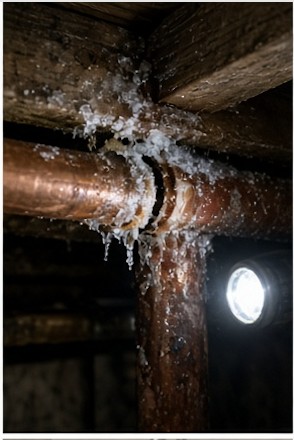
Gilmanton is rural, spread out, and almost entirely on private wells and septic systems. No municipal water, no village sewer — which means when something goes wrong with the water here, the whole system is yours, and the fix is yours too.
Gilmanton covers a lot of ground for a town its size — Gilmanton Corner, Gilmanton Iron Works, and a long web of back roads through farmland and woods with houses set well off the pavement. There is no municipal water system and no town sewer. Effectively every property is on a drilled well with a pressure tank and a private septic system, which makes the homeowner responsible for the entire chain from the aquifer to the drain field.
That has practical consequences. A power outage here isn’t just an inconvenience — no power means no well pump, which means no water at all, and no way to flush. Gilmanton loses power more often and for longer than the village towns do, and homes with a generator or at least a stored-water plan get through winter storms a lot better. It also means water quality is entirely a private matter: no municipality is testing or treating what comes out of your tap.
The housing runs old. There are eighteenth- and nineteenth-century farmhouses out here that have had plumbing added, moved, and re-added across a century and a half, often with the original well line still entering through a fieldstone foundation. Add long dirt driveways, deep frost on exposed hillsides, and outbuildings with their own frost-free hydrants, and you get a specific Gilmanton failure list: frozen well lines at the foundation entry, waterlogged pressure tanks, and hydrants that were never drained.
Access is its own factor. Some of these roads are not maintained in winter, and we’d rather know that when you call than discover it at the end of the driveway.
Know where your pressure tank, pressure switch, and well shut-off are before something fails — and put a label on them. In a town with no municipal backup, five minutes of knowing where things are is the difference between a wet floor and a flooded basement.
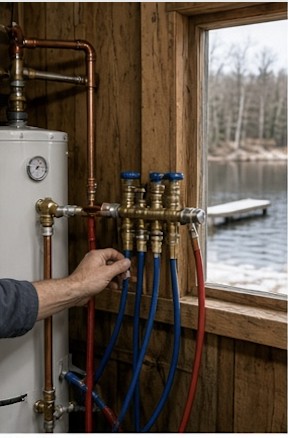
Seasonal shutdowns and spring startups, done methodically and documented in writing.
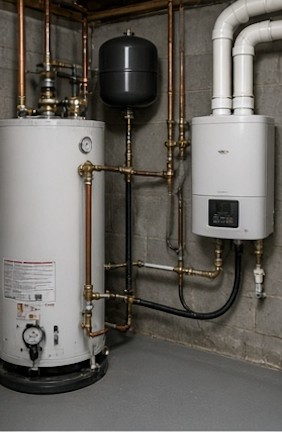
Tank and tankless, sized for your house and our cold inlet water — not just matched to the old one.
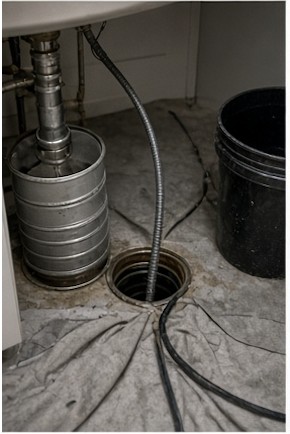
Clogged sinks, tubs, toilets, and main lines cleared — plus why it clogged in the first place.
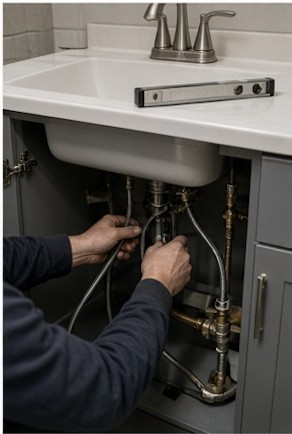
Faucets, toilets, shut-off valves, tub and shower work, and remodel rough-in.
Emergency or routine, year-round house or seasonal camp — tell us what’s going on and we’ll give you a straight answer on cost and timing.
Describe what’s happening and where the property is. We’ll come back with a straight answer on what it likely is, what it should cost, and when we can be there. If it’s an emergency, say so in the first line.
We reply to every request within 2 business hours.